
Summary of box changes
1.1 What's a transformer?
The transformer (Transformer) is a device that uses the principles of electromagnetic sensing to change the exchange voltage, consisting mainly of primary, secondary and iron cores (magnetic cores). The main functions are voltage conversion, current conversion, resistance to transformation, isolation, pressure stabilization (magnetic saturation transformers), etc. The categories of electrical transformers and special transformers by use can be: electrical transformers and special transformers (electric furnaces, voltage, industrial frequency test transformers, voltage regulators, mineral transformers, audio transformers, medium frequency transformers, high frequency transformers, shock transformers, instrument transformers, electronic transformers, electric resisters, intersensors, etc.).
What's a box change?
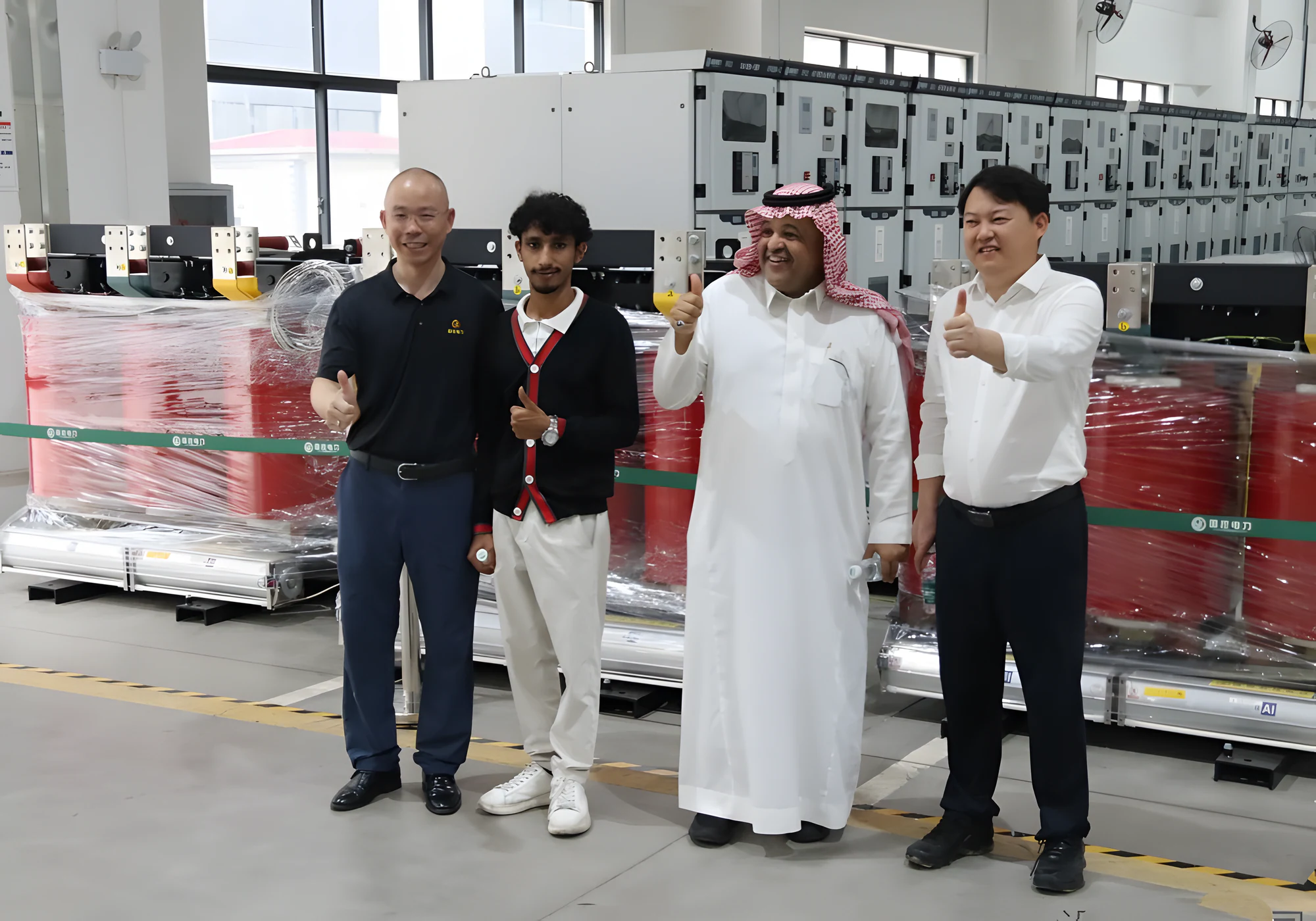
Box transformers, also called box transformers, pre-packaged transformers or pre-packaged transformers, referred to as “box changes”. Box transformers are used as a complete distribution of electrical equipment, consisting of transformers, high voltage voltage control equipment, low voltage control equipment and organic combinations. The rationale is that a particular transformer is formed by pressure-starting systems, wiring, fully automated transformer power stations, direct flow points and corresponding technical equipment, with a reasonable configuration in the prescribed order, and that all components are installed in a specific fully sealed steel tank structure such as water, dust and rodent protection.
1.3 Boxes change advantages
Conventional transformers are designed to be concentrated in box casings, with low investment, small size, short construction cycles, ease of repair, high reliability, physical diversity and ease of coordination with the surrounding environment, low weight, low noise, low wear and tear, easy operation, flexible combinations, high operational safety advantages, etc., and are applied across the wide box transformers in a variety of areas and become essential electrical equipment in today ' s electrical engineering. The advantages are the following:
1.3.1 Small land area
As the internal configuration of the box transformer is reasonable, the space occupied is small. In contrast to the traditional transformers, box transformers have installed high-voltage distribution equipment in a sealed steel-structure box by scientifically reasonable means, with a tight internal structure and a rather small gap between components, so that box transformers also occupy relatively small space.
1.3.2 Simple operation
The box transformer operation is simple and easy to assemble quickly. Quick assembly is facilitated by specialized designers who are aware of the construction requirements for electrical engineering, with simple, easy-to-operate individual main lines and accompanying out-of-box equipment in accordance with different requirements.
1.3.3 High level of automation
Control of humidity, temperature and far-off smoke alerts to meet the requirements of unmanned duty; Remote video monitoring is also possible as required.
1.3.4 Investment efficiency savings
The benefits of box transformers are high. In terms of the cost of creating, it is clear that the cost of creating box transformers is often between 300,000 and 500,000. In terms of operating costs, it can be seen that even in full load operating conditions, box transformers consume about 1 million degrees less power per year than normal transformers, and that maintenance costs are lower even if problems arise. So, box transformers have higher application benefits.
1.3.5 Prefabricated plants
When designed, the designer will be able to select the box transformation specifications and models provided by the manufacturer once the main circuit and off-box equipment has been designed in accordance with the actual requirements of the plant. All equipment will be installed at the plant, debugged and certified at a time, and the plant will be truly built at the transformer station. The design construction cycle will be shortened. On-site installation will require only the positioning of boxes, inter-cable cable links, cabling connection to exit cables, protection of fixed-value verification, transmission tests and other commissioning tasks, and the construction period will be significantly shortened by approximately five to eight days from installation to delivery.
1.3.6 Flexible combination approach
The box transformer combination is flexible. Because box transformers are structurally compact and simple, each of them is a separate system, which creates considerable flexibility in the form of box transformers.
1.3.7 Technologically advanced and secure
Box transformers operate with greater safety and stability. Since box transformers use metal conductors with greater preservative capacity, the interface between their internal equipment and the equipment uses insulation materials, with air conditioners and detour equipment in the box, greatly increases the resistance of box transformers to the outside environment and improves the safety and reliability of their operations.
1.3.8 Appearances, ease and harmony with the environment
It is easy to reconcile with the surrounding environment by selecting the shell colour of the box transformer, especially for urban construction, such as residential areas of urban residents, stations, ports, airports, parks and green belts, which can serve as fixed transformers, or mobile transformers, with dotting and beautification environments. The blue box takes into account the harmony with nature, and the blue one is the blue one.
1.4 Boxes are inadequate
The box transformer is the main orientation of current grid adaptation applications, but there are some shortcomings in some areas, as shown by:
The choice of box transformer points, mostly on both sides of the population ' s core areas and roads, and the noise and dust pollution resulting from the construction work have some impact on the urban environment and the normal life of the population;
(a) The traditional construction of the existing concrete base, which involves digging up municipal facilities and placing building materials, must take up larger construction sites, which would make it difficult for traffic and the normal movement of the population;
The conventional box transformer typically takes about 12 days from the basic to the completion of the installation, which is too long for large-scale use;
(a) The traditional existing concrete base during basic excavations, maintenance periods, when the warning signs are not clear or the security fence is damaged and the nearby residents, pedestrians are mistakenly entering the construction site, may cause personal injury and increase security risks; The fifth, in the case of the box transformer retrofit, would have a severe impact on the population ' s basic use of electricity, given the excessive power outage.
1.5 Boxes converted
It is widely used in residential areas, streets, large construction sites, high-rise buildings, parks, commercial centres, light stations, airports, factories, enterprises, hospitals, schools and temporary facilities on both sides of the road network.